
Paint Matching in Collision Repair: How Pros Make It Look Factory-New
Paint matching is key to quality collision repair. Learn how pros blend paint, match factory colors, and restore your finish in Abilene, TX.
Introduction
The mark of a truly great repair is that you can’t see it at all. For many Abilene drivers, the biggest fear after an accident isn't just the structural damage, but the worry that their car will come back with a "patchwork" look—where one door is a slightly different shade than the rest of the body. Achieving a factory-new finish is a blend of high-tech science and seasoned artistry. At D&D Collision, we use advanced paint matching technology to ensure your vehicle leaves our shop looking like the accident never happened.
Why paint doesn’t “match itself” over time
You might think that simply using the manufacturer's paint code would guarantee a perfect match, but it is rarely that simple. From the moment your car leaves the factory, its paint begins to change. The intense West Texas sun, road chemicals, and varying weather conditions cause pigments to fade and the clear coat to subtly shift in tone. If we were to apply "brand new" paint directly from the factory formula, it would likely look too bright or too deep compared to the rest of your vehicle’s aged finish.
How factory paint codes work
Every vehicle has a unique paint code, usually located on a sticker in the door jamb, under the hood, or in the trunk. This code provides the "DNA" of your car's color, giving us the exact ratios of pigments, metallic flakes, and pearl additives used during manufacturing. However, even within a single paint code, there can be "variants." This is because different batches of paint used at different assembly plants might have slight inconsistencies. Our technicians use these codes as a starting point, but we never rely on them as the final word.
Blending panels for seamless results
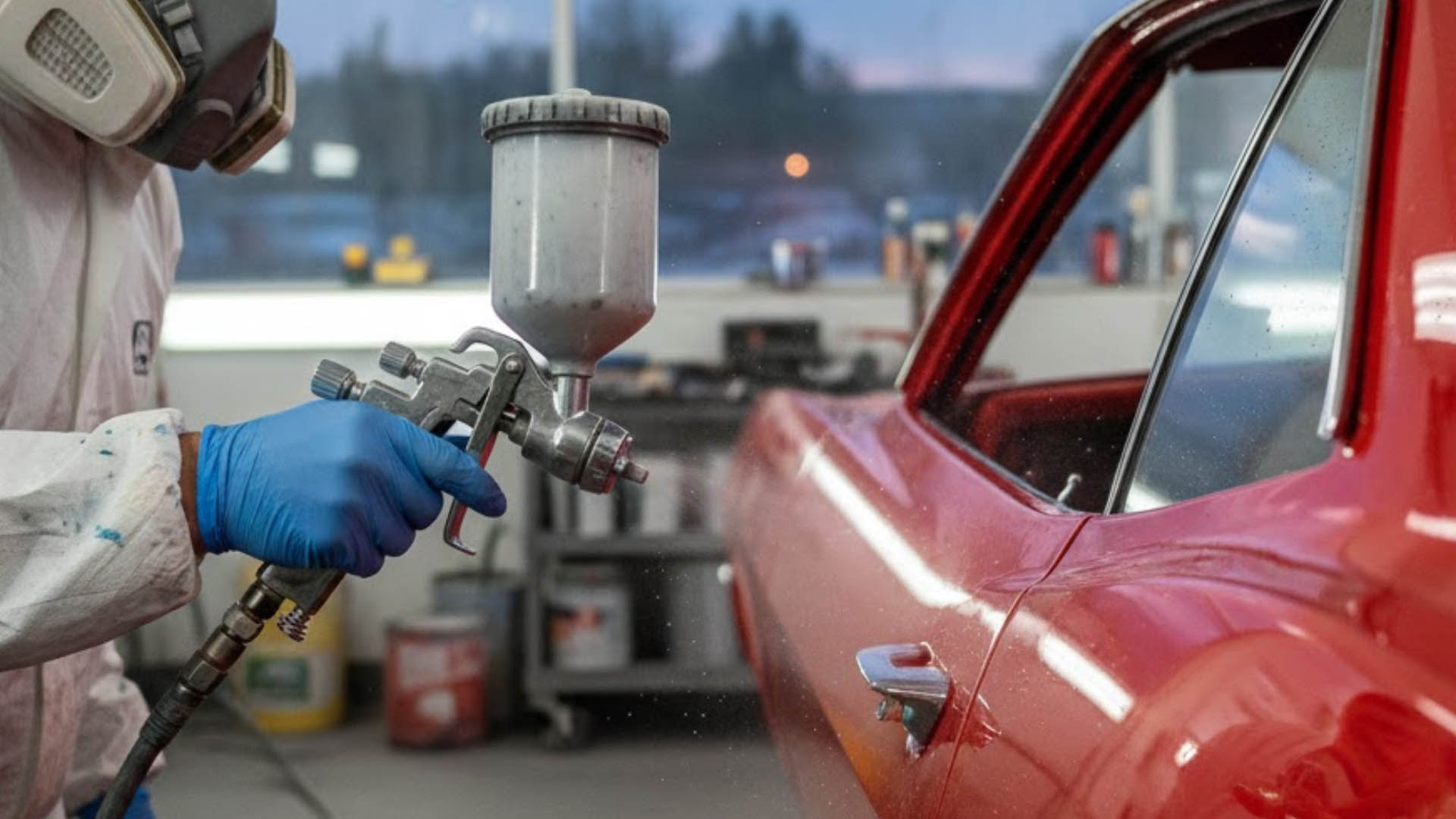
The secret to an invisible repair is a technique called auto paint blending. Instead of stopping the new paint exactly at the edge of the repaired panel, our painters gradually "mist" the new color onto the adjacent, undamaged panels. This creates a soft transition that tricks the human eye. By the time the new paint meets the old, the change is so gradual that even a professional appraiser would have a hard time spotting the boundary. We then apply a fresh clear coat over the entire area to ensure the gloss and texture are uniform.
Metallic, pearl, and tri-coat challenges
Modern vehicles often feature complex finishes that go beyond simple colors. Metallic paints contain tiny flakes of aluminum, while pearlescent finishes use ceramic crystals to reflect light. If the spray pressure or the angle of the spray gun is off by even a fraction, these flakes will "lay" differently, causing the color to look different when viewed from a side angle—a phenomenon known as "flop." Tri-coat finishes add a third layer of translucent paint between the base and the clear coat, requiring extreme precision in layer thickness to achieve the correct depth and glow.
Clear coat + finish quality
The final step in making a repair look factory-new is the clear coat. This transparent layer provides the shine and protects the color underneath from UV damage. If the clear coat is too thick, it can look "wavy" (often called orange peel); if it's too thin, it won't have the deep luster of a factory finish. After the paint has cured in our climate-controlled booth, we perform a final buff and polish to match the "texture" of the rest of your car’s original finish, ensuring a mirror-like reflection across every panel.
Conclusion
Paint matching is as much a science as it is an art. By combining digital tools like spectrophotometers with traditional blending techniques, we can overcome the challenges of sun fading and complex metallic finishes. When you choose a shop that invests in these advanced processes, you aren't just getting a repair—you're getting a restoration that preserves the beauty and the value of your vehicle.
To get an estimate on paint touch-ups or full panel refinishing: CLICK HERE
FAQs
Will the paint match exactly? While a 100% "perfect" chemical match is nearly impossible due to aging, our professional blending techniques make the transition invisible to the human eye, resulting in a look that is indistinguishable from factory-new.
How long does paint take to cure? While the paint is dry to the touch when you pick up your car, it can take 30 to 90 days to fully "outgas" and harden. We recommend waiting at least a month before using a commercial car wash or applying wax.
Can you repaint just one panel? We can, but for the best visual result, we almost always recommend blending into the neighboring panels. This ensures that any slight variations in the mix are completely hidden.
Does sun fading affect matching? Yes, significantly. This is why we use digital scanners to read the current state of your paint rather than just relying on the original factory code.
What causes orange peel or dull paint? Orange peel is caused by improper spray gun settings or environmental factors during drying. Dull paint often results from a lack of proper polishing or a thin clear coat. We use a climate-controlled booth to prevent these issues.
Need hail or collision repair in Abilene?
Get a free estimate today. We work directly with your insurance company and back every repair with our lifetime paint warranty.
Related Articles
 Blog
BlogOct 16, 2026
Is it Safe to Buy a Car with a "Rebuilt" or "Salvage" Title?
A "rebuilt" title can save you 40% on a car, but is it actually safe? Discover the red flags of salvage vehicles and why the "reason for the total" is the most important factor.
Read Article Blog
BlogOct 9, 2026
How a Professional Detail After a Repair Can Boost Your Resale Value by 10%
A clean car is a valuable car. Learn how professional paint correction and interior restoration can provide a 4x return on investment when it's time to sell your vehicle.
Read Article Blog
BlogOct 2, 2026
The Lease-End Inspection Guide: How to Avoid Massive "Excess Wear" Fees
The difference between a "normal" scratch and a $200 fee is often just a few millimeters. Discover how to prep your car for a lease-end inspection and save hundreds on repairs.
Read Article